

By Cristin Schmitz
Law360 Canada (March 10, 2026, 5:40 PM EDT) — As the federal and B.C. governments push ahead with new anti-hate measures, legal experts in the Jewish community advise that robust political leadership, specialized training for prosecutors and police, and new legal tools — bolstered by greater enforcement of the existing criminal law — are keys to fighting the explosion of antisemitism and hate in Canada since the terrorist massacre of hundreds of people in Israel on Oct. 7, 2023.
Following attacks on three synagogues last week, Public Safety Minister Gary Anandasangaree stood in front of Toronto’s Shaarei Shomayim synagogue on March 8 and vowed to fulfil the Jewish community’s repeated requests for stronger anti-hate legal measures and expedited funding to improve security at synagogues and Jewish daycares and schools.
The Toronto Liberal MP made his remarks after the North York synagogue and the nearby Beth Avraham Yoseph synagogue in Thornhill were both shot at in the early morning hours of March 7. Bullets also struck Temple Emanu-El in North York on the night of March 2. (No injuries were reported, but police said two people were inside the Thornhill synagogue when the shooting occurred.)
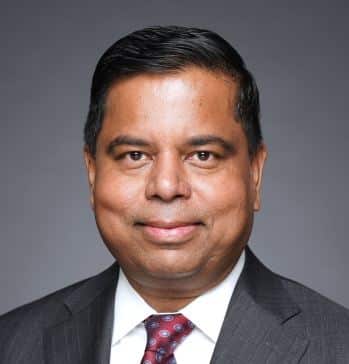
Federal Public Safety Minister Gary Anandasangaree
“When they attack a synagogue, they attack Canada,” Anandasangaree told reporters last weekend as Jewish community leaders, local politicians and police looked on.
The Toronto human rights lawyer said Ottawa will drive forward its signature anti-hate bill, the proposed Combatting Hate Act (Bill C-9), which would codify a definition of hate; make it illegal to intimidate and obstruct people from accessing places of worship, schools and community centres; and make it a crime to wilfully promote hatred against an identifiable group by publicly displaying certain terrorism or hate symbols.
Bill C-9, which was introduced last September, has been stalled for months in the Commons Justice Committee, but on March 9 and 10, MPs debated and passed the minority Liberal government’s motion (supported by the Bloc Québécois), requiring the committee to move on with paused clauseby-clause review of Bill C-9 without further delay.
Bill C-9 has been filibustered by Conservative committee members opposed to Bill C-9’s proposed removal of the existing “good faith” religious expression defence to the crime of wilful promotion of hatred — a defence the Liberals point out has never been successfully relied on. However, the official opposition called for Bill C-9 to be withdrawn, arguing its provisions would impinge on Canadians’ constitutionally protected freedom of religion and free speech and is apt to criminalize such sacred texts as the Bible, the Qur’an and the Torah.
On March 10, Justice Minister Sean Fraser told the Commons that in order to “reflect the feedback” the Liberal government has heard from some faith communities, it is amending Bill C-9 “to make clear that the practice of one’s faith will not be considered a crime in Canada. That is the position of the government.”
Fraser’s parliamentary secretary Patricia Lattanzio told the House of Commons the bill has had more than 30 hours of study. “After six months of delay, it is time for Parliament to move forward,” said the Montreal lawyer, who pointed to last week’s synagogue shootings as “literally a reminder that Bill C-9 needs to pass, and to pass quickly, to send a strong message to Canadians that hate crimes are heinous and must be denounced.”
“That is why we are acting on Bill C-9 to make it illegal to block or impede someone’s access to their community or religious centre and create a new stand-alone hate offence so that these crimes are treated seriously,” Lattanzio said.
On March 11, Anandasangaree announced “a dedicated investment” of up to $10 million for eligible organizations, through the Canada Community Security Program, to help Jewish communities improve security in their gathering spaces, including schools, daycares, overnight camps and places of worship. The money will go toward security equipment and hardware, such as protective barriers, “minor renovations to enhance security-like reinforcements for windows and doors,” security and emergency assessments and plans, “training to respond to hate-motivated events and time-limited third-party licensed security personnel.”
The funding also aims to support the work of security operations centres to coordinate monitoring and security at Jewish institutions as well as projects supported through these organizations, the Department of Public Safety said.
CIJA said, “Today’s announcement of emergency funding to address some of the immediate security
needs of the Jewish community is an essential and welcome step at a time when Jewish Canadians
face serious threats.”
The group called the level of security measures needed to protect Jewish Canadians in Canada “shocking.”
“These measures are necessary to ensure the safety of children going to school, families going to community centres and people visiting their elderly parents,” CIJA said. “Moving forward, we urge the government to quickly fulfil its commitment to improve and significantly enhance funding for the Canada Community Security Program overall. … It’s not just the Jewish community’s safety that’s at stake, but Canada’s national security and our Canadian way of life.” CIJA added that along with the emergency boost in security funding, “these threats must also be addressed at their root, using every tool available. This includes enforcing current laws with consistency and ensuring perpetrators are brought to justice, and advancing new legislation, including the [proposed] Combatting Hate Act and the criminalization of wilful promotion of terrorism, among other measures to protect Canadians.”
The Liberal government’s current sense of urgency was shared by British Columbia’s NDP government, which on March 9 introduced in the B.C. legislative assembly Bill 12, the Safe Access to Schools Amendment Act and Bill 13, the Safe Access to Places of Public Worship Act, a government spokesperson told Law360 Canada.
The provincial government’s accompanying announcement said the companion bills aim to protect unobstructed access to places of worship, such as mosques, temples, gurdwaras, synagogues and churches, and to renew similar existing protection for students, staff, parents and caregivers in respect of kindergarten to Grade 12 schools.
Since 2023, there have been more than 40 “protest disruptions” outside K-12 schools, with police called in on some occasions, the government pointed out.
However, the frequency of such incidents outside K-12 schools has fallen since the enactment of the Safe Access to Schools Act (SASA), which will “sunset” on July 1, 2026. Bill 12 would extend SASA’s life to July 1, 2028, while Bill 13 will be reassessed in 2030, the government said.
British Columbia’s announcement was welcomed by the Centre for Israel and Jewish Affairs (CIJA), which supports passage of Bill C-9 and has been campaigning for politicians and police to expedite needed law reforms and resources to help secure and defend Jewish communities across the country.
“Here in B.C., we have seen community institutions, including our places of worship, targeted by aggressive protesters, arson, vandalism and even firebombs,” CIJA said in a statement. “No child, senior citizen or family should be unsafe in their place of worship or at school.”
“Freedom of expression is a fundamental right, but it does not mean that communities should face harassment,” CIJA added.
To address the alarm and frustration expressed by many Jews about the weak enforcement they see of existing hate crime offences in the Criminal Code, CIJA held a panel discussion on Feb. 10, which asked: “Why can’t there be more consequences?”
More than 700 people tuned in on Zoom, including many concerned members of Jewish communities, to hear the panel of three lawyers and a former Toronto police inspector give their views on when and how existing and proposed criminal prohibitions aimed at hatemongers can — and should — be enforced to protect Jewish people and places from the kinds of harassment, violence and hate speech they have been subjected to since the Oct. 7 mass murders.
Among a number of scenarios that were put forward as examples of inadequate law enforcement was the Crown’s withdrawal of an assault charge in favour of a six-month peace bond for an accused who spat at a Jewish videographer who was covering a demonstration.

Rochelle Direnfeld, Alliance of Canadians Combatting Antisemitism
“It would not be unusual for low-level offences to be resolved in this way, by way of a peace bond,” remarked panellist Rochelle Direnfeld, senior criminal counsel with the Alliance of Canadians Combatting Antisemitism.
“What makes this not a low-level offence is that it’s hate-motivated — this spitting was accompanied by screaming at the victim ‘Zionist pig,’” the former Crown explained. “So, if the Crown is not knowledgeable and hasn’t been trained and doesn’t understand that this actually is a hate-motivated offence, then they’re going to be inclined to resolve this the way they would any other low-level offence, and that’s the problem” she said.
Specialized training is needed to facilitate more and better enforcement of the hate crime offences, said panellist Mark Sandler, who with Direnfeld co-created a teaching module on antisemitism and hate crimes, which they have offered to more than 40 police services.
“We’re seeing … the lights go on for a number of police services as we explained, not only the full tools that are available to them to enforce our existing laws, but how [Bill] C-9 can sharpen some of those tools,” said Sandler, the senior Toronto criminal defence counsel with Cooper, Sandler, Shime & Schwartzentruber LLP, who also chairs the Alliance of Canadians Combatting Antisemitism.
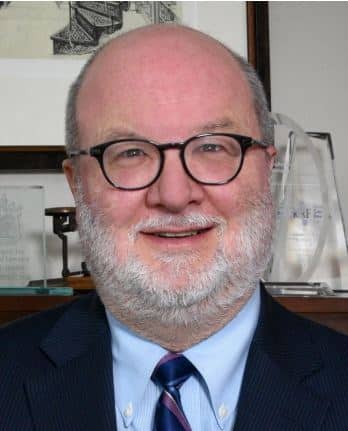
Mark Sandler, Alliance of Canadians Combatting Antisemitism
“But that [training] has to be accompanied by that same kind of training for prosecutors,” Sandler advised. “We need either specialized hate prosecutors in all jurisdictions, or we need robust training along the lines that, I like to say proudly, we are doing — so that [Crowns] actually understand what antisemitism looks like, how it is contemporarily expressed by those who hate us, and that they understand why a deterrent message has to be sent on a number of these cases. So that’s what we’re working on.”
Commenting on a scenario of a public demonstration involving chants of phrases such as “from the river to the sea, Palestine shall be free,” “all Zionists are racist,” “all Zionists are evil” and “all Zionists are child killers,” Sandler highlighted misconceptions he sees about what constitutes criminal hate speech.
“These are all things that have been said in the course of protest activity, and there’s an inclination on the part of some to isolate individual statements and ask whether they constitute a violation of the hate speech laws,” he remarked.
But the training he and Direnfeld provide asks police to take a “holistic” approach, Sandler said, “based upon being informed about the meaning of some of these phrases and their historical significance, but also based upon a likelihood of success in prosecution.”
“So ‘From the river to the sea, Palestine shall be free’ … those of us in the Jewish community are all too familiar with this phrase, all too familiar with the origins of the phrase, and all too familiar that it has been utilized to express a genocidal intention to kill all Israelis and to kill Jews,” Sandler remarked. “So, for us, it is a highly inflammatory and highly problematic statement to be said at a protest.”
“On the other hand,” he continued, “and I don’t always say what the community wants to hear, … we’ve seen too many examples of people, when confronted with chanting this expression, don’t know which river they’re talking about, which sea they’re talking about, and seem to provide some more benevolent explanation for what it is that they mean, at least when they’re chanting this expression.”
Sandler said he has no illusions about what protest leaders mean by this chant, but “in terms of criminal prosecution, it’s important for police to accumulate evidence of the totality of what is being said, because ultimately, they have to demonstrate that the intention is to wilfully promote hatred or genocide directed against Jews or Israelis,” he explained. “So, if you have ‘From the river to the sea, Palestine shall be free’ as the only chant that’s being expressed, it’s doubtful that that’s going to result in a successful criminal prosecution.”
If that chant is combined with other phrases, such as “Water to water, Palestine shall be Arab,” “Sinwar, Sinwar, we have bullets for you” or with “By any means necessary,” then “the genocidal intention, and therefore the wilful promotion of hatred, becomes more apparent — or the public incitement of hatred likely to lead to a breach of the peace becomes more apparent,” Sandler said.
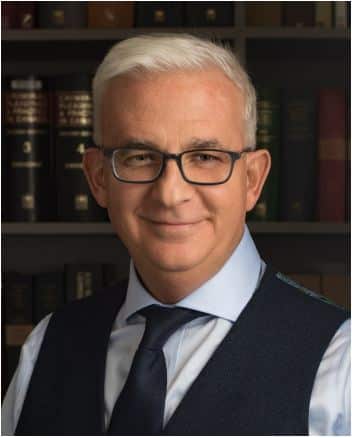
Joseph Neuberger, Canadian Jewish Law Association
Panellist Joseph Neuberger of Toronto’s Neuberger and Partners, who chairs the Canadian Jewish Law Association, said that distinguishing between criminal hate speech and criticism of Israel, and its government, policies and conduct, is a legal issue that comes up in the context of public protests and demonstrations.
“If the only communication during this protest, whether vocally or in writing, is that ‘Israel is committing genocide in Gaza; end the genocide by Israel; Israel killing machine,’ … these types of public statements will not constitute a criminal offence of public incitement of hatred or wilful promotion of hatred,” the senior criminal defence counsel said. “No matter how deeply disturbing we find it or how false we find it, … it is criticism of the State of Israel, its policies, its military conduct, political objectives, and is protected speech.”
Sandler pointed out that the working definition of antisemitism (which is not legally binding), as adopted by the International Holocaust Remembrance Alliance in 2016, recognizes that criticizing Israel in the same way as other countries are criticized is not antisemitic.
“It becomes antisemitic when it involves a double standard applied to Israel,” he said. “And in the criminal context, police are reticent to lay charges, and prosecutors are reticent to prosecute cases that aren’t the obvious ‘Kill all the Jews’ [communication] where ‘Jews’ are actually used as part of the nomenclature.”
However, public expressions such as “‘All Zionists are racist. All Zionists are evil. All Zionists are child killers’” go beyond criticism of Israel, Sandler said, “because those are characterizations that, in effect, label over 90 per cent of Jews, … without distinction, as evil, as child killers, as genocidal. And for me, that constitutes hate speech, when viewed cumulatively.”
He added that “the challenge for us is to explain, sometimes through expert evidence and sometimes through education and training of police and prosecutors, why this crosses a threshold from criticism of Israel and its policies to hatred directed against the vast majority of Jews and against Israelis.”
Panellist Hank Idsinga, a retired Toronto Police Service inspector, described himself as “pretty critical of how, especially in Toronto, police have been handling some of the protests on the ground.”
Commenting on hate crime enforcement challenges for police, especially at protests, Idsinga said there are many existing legal tools, but those at the grassroots level mostly lack specific training on how to use those tools.
“Police are very well-trained when they go through the police college on their powers of arrest and giving [accused their] rights to counsel and caution,” he said. “But to get into the nitty-gritty of the actual laws that are out there leaves something to be desired.”
Idsinga said some online training is available nationally, as well as training modules on the foundations of Judaism, understanding antisemitism and on police responses to hate crimes
“So, really they are depending on these modules for learning how to recognize hate and terror symbols,” Idsinga said. But “when these symbols are displayed at some of these protests, sometimes I look at them and I have no idea what they are until somebody analyzes it and says, ‘You know, that’s what that is.’ I would think your average police officer probably isn’t going to know what, for example, the ISIS flag looks like, and that needs to be cleared up in training.”
Idsinga also noted that police rely on a “top-down command structure.”
“Folks on the front line may be more than willing to arrest people and do some enforcement at some of these protests or some of these other scenarios,” he suggested.
“But if everybody in the command pillar isn’t on the same page, it’s simply not going to happen,” he said. The rank-and-file police officers will “be dissuaded from taking action, and they really need that willingness to enforce the existing laws, right from the chief [of police] all the way back down to the rank and file, who are the ones out there on the street.”
Idsinga advised, “We need a lot more senior leaders, if they are well versed in the laws and the powers, to really be out there at these protests.”
“We’re simply not seeing that,” he remarked. “So really, it has to be a zero tolerance towards these offences and unfortunately, … as of October 8, 2023, [police leaders] were taking a real hands-off approach, and I think it’s really made the problem worse.”
Neuberger said, “We also need to focus on the willingness of our political leaders to ensure that the laws are enforced” — a willingness that has not been apparent in many hate crime situations
“The vilification and hatred directed at the Jewish community is like no other,” he emphasized.
“I encourage everybody to not let the politicians off the hook,” he urged.
“I encourage everybody to be literate and active and engaged in your politicians from the municipal level, provincial and federal,” Neuberger added. “A lot is being done by everybody here to make change with the police, to make sure that laws are being enforced. But we still need to be politically active. It’s a key component, and I encourage everybody to be fully engaged.”
Before MPs returned to the House of Commons on March 9 after a week-long break, CIJA urged the Liberal government and all parliamentarians to build cross-party consensus and “act now by providing clear direction for authorities to enforce existing laws, strengthening Bill C-9 through targeted amendments — including a new offence for the wilful promotion of terrorism — and pass this important legislation that enhances existing laws and provides additional tools for law enforcement and prosecutors to utilize to keep our communities safe.”
If you have any information, story ideas or news tips for Law360 Canada, please contact Cristin
Schmitz at cristin.schmitz@lexisnexis.ca or call 613-820-2794.